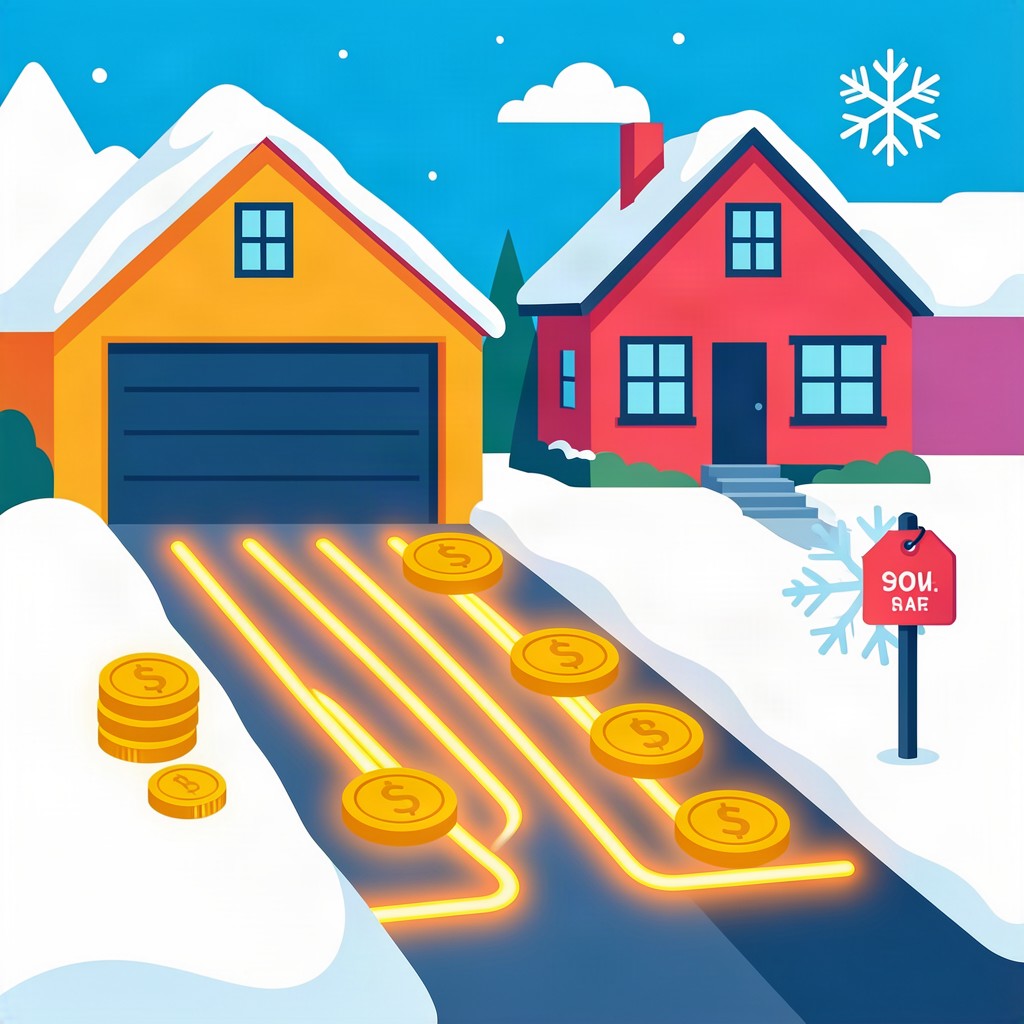
The pitch for a heated driveway is seductive, and it's almost always told in the past tense: the night a storm rolled in, you went to bed, and when you woke up the driveway was clear. No shoveling, no scraping, no 5 a.m. phone call to a plow contractor who may or may not show up. But here's the uncomfortable truth that every installer knows and most homeowners learn the hard way: that experience is only possible if the system was tested before the first freeze. A heated driveway is a machine, and like any machine, it either gets its annual checkup or it fails at the worst possible moment — usually the morning of a blizzard, when every contractor is booked, every store is out of salt, and the weather is doing exactly what it was predicted to do.
The Dream: What "Automatic" Is Supposed to Buy You
Let's start with what you're actually paying for, because it frames every maintenance decision that follows. A properly functioning snow-melt system delivers three things that are easy to take for granted. The first is the sleep-in factor: the system runs silently overnight, doing its work while you're asleep, so the driveway is done before you even look out the window. The second is zero logistics: no plow contracts to renew, no last-minute salt runs when the forecast suddenly turns ugly, no standing in the cold waiting for a contractor who's running late because he's swamped with a hundred other driveways. The third is interior preservation: no corrosive rock salt tracked across hardwood floors, no chemical residue eating into your entryway, no constant sweeping and mopping after every storm.
That's the goal state. The reality is that automatic only works if the system has been tested. It's the single most important sentence in the whole pre-season playbook. Failing to conduct pre-season checks risks catastrophic system failure on the morning of a blizzard — not a gradual degradation, not a minor inconvenience, but a full system failure at exactly the moment you need it most. The good news is that a pre-season checkup is cheap, fast, and mostly about knowing which of the two heating ecosystems you own.
Know Your Ecosystem: Hydronic vs. Electric
Before you can maintain a heated driveway, you have to know what kind of machine it is. There are two fundamentally different ecosystems on the market, and they fail in completely different ways. The first is the mechanical, fluid-based ecosystem: a system powered by high-efficiency boilers or heat pumps that relies on fluid dynamics and moving parts to push heat through the slab. The second is the solid-state, resistance-based ecosystem: an electric system that draws direct current at roughly 30 to 50 watts per square foot and has zero moving parts in the heating element itself.
That distinction matters more than any other fact in this article. A hydronic system is essentially a miniature plumbing plant buried under your driveway — it has pumps, valves, fluid, and a heat source, and all of those things wear out. An electric system is closer to a toaster element embedded in concrete — dramatically simpler, but with its own specific vulnerabilities. The maintenance programs for the two are almost entirely different, and the biggest pre-season mistake homeowners make is treating them like the same machine.
The Hydronic System: Components and Vulnerabilities
If you own a hydronic system, your pre-season focus is on the parts you can see in the mechanical room, because that's where hydronic systems fail. The heat distribution itself runs through ½-inch or ¾-inch PEX-A tubing — the "A" grade matters, because PEX-A has the freeze-thaw resistance that makes it suitable for being buried in a slab that cycles between frozen and wet all winter. The fluid circulating through that tubing is a mixture of water and propylene glycol, the antifreeze that keeps the loop from freezing solid when the system is idle.
Here's the catch with that fluid: glycol degrades over time. As it ages, its protective properties weaken — the mixture's impedance to freezing lowers, and the fluid becomes more corrosive to the system's internal components. That's why the annual glycol check isn't optional; it's the single most important test a hydronic system gets all year. The mechanical equipment deserves equal attention. High-efficiency boilers, heat pumps, and circulator pumps are the workhorses, but their supporting cast — solenoid valves, check valves, drains, and the pumps themselves — are the vulnerable points, and they fail against high pressure spikes. A stuck check valve or a seized solenoid doesn't announce itself in September; it shows up in January.
The Electric Element: Fewer Parts, One Big Threat
The electric side of the industry is a study in simplicity. The heating element itself is a twin-conductor heating cable with built-in resistance to fluids, wrapped in EPDM or polyethylene insulation chosen for protection and durability. The stated lifespan is 20 years, typically. Run the vulnerabilities matrix on an electric system and you get a remarkably short list: mechanical wear — none. Fluid leaks — none. The primary threat is external physical damage — the cable gets cut during a surface repair. That's it. No pumps to seize, no valves to stick, no fluid to test.
But don't mistake "simple" for "maintenance-free." The vulnerability profile is different, not absent. The most common electric-system failures in the field are insulation failures in the cable itself and nuisance tripping of the GFEP (ground-fault equipment protection) breaker — both of which are detectable before the season starts, and both of which are catastrophic if discovered during a storm. Which brings us to the actual pre-season work.
The Maintenance Divide, Side by Side
Lay the two ecosystems side by side and the maintenance picture snaps into focus. On the hydronic side, you have moving parts to replace — pumps, valves, and related components that wear and need periodic service. You have fluid and pH checks, because the glycol mixture degrades and needs its chemistry verified. And you have an annual professional service recommendation, because boilers and burner assemblies are not homeowner-diagnosable equipment. On the electric side, there are no moving parts to replace and no fluid to test; the annual service burden is essentially zero. But both ecosystems share one non-negotiable: pre-season diagnostics. Hydronic or electric, the system must be tested before the first freeze — the check just looks different.
The Big Three Diagnostics for Fluid-Based Systems
For hydronic systems, pre-season readiness comes down to three numbered procedures. The first is the glycol and pH check: verify the antifreeze concentration is still adequate and the fluid chemistry hasn't turned corrosive. This is the test that catches degraded glycol before it damages the boiler, the pumps, and the tubing. The second is the pump and valve inspection: exercise every solenoid and check valve, confirm the circulator pumps are moving water, and look for leaks at the drains and fittings. The third is the boiler ignition test: fire the boiler and confirm it lights, runs, and modulates properly before the season demands it do so in a blizzard. Run those three checks in September or October and you've eliminated the vast majority of hydronic winter failures.
The 5-Minute Ohmmeter Test
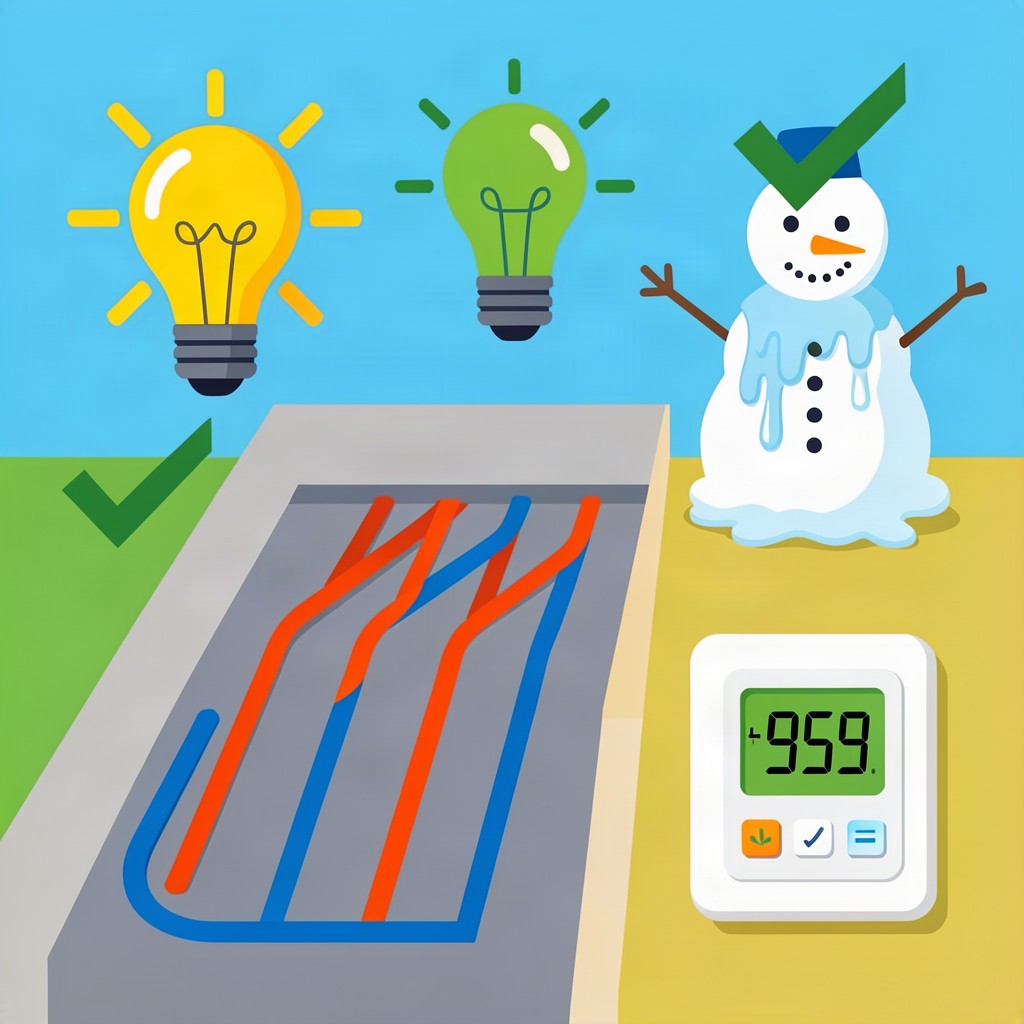
For electric systems, the equivalent ritual is dramatically faster — the industry calls it the five-minute ohmmeter test, and the name is accurate. You connect an ohmmeter to the heating cable and work through a short sequence of measurements that verify the integrity of the circuit: the insulation resistance between the conductors and ground, and the continuity of the cable itself. A healthy result shows up as a clean pass on the meter; an insulation-resistance failure shows up immediately. The entire test takes about five minutes per circuit, requires no special tools beyond the meter, and tells you with near-certainty whether the cable will survive the winter. It's the cheapest insurance in the industry, and it's the test that catches those cuts and nicks that happened during last summer's patio repair.
Fault Finding: Solid-State Systems
When an electric system does fail, the symptoms tend to cluster around two known panels. Panel A is insulation resistance failure — the cable's insulation has broken down, often from physical damage or age, and the circuit is leaking current. This is what the ohmmeter test exists to catch before the season, and it's what a technician confirms with the same meter when a system stops working mid-winter. Panel B is GFEP breaker tripping — the ground-fault protection is doing its job, which means there's a fault it's detecting. The frustrating part is that a tripping breaker can be caused by moisture ingress, a damaged cable, or a failing component, which is why the diagnosis usually starts with a meter and a methodical walk of the circuit. The takeaway for homeowners: when an electric system stops working, it's almost never a mystery of moving parts — it's an electrical fault, and it's findable.
Fault Finding: Fluid-Based Systems
Hydronic failures are more varied, but they follow predictable patterns, and the deck's diagnostic maps are worth memorizing. If you're seeing uneven melting — hot and cold spots across the slab — the root cause is almost always unbalanced loops, for example a ½-inch PEX-A circuit exceeding 300 linear feet, or an inadequate flow rate or supply temperature. If the system won't activate during a storm, look first at the sensing side: a faulty pavement sensor or a thermostat communication failure. If the system eventually works but responds unusually slowly, suspect the heat source: a boiler undersized for the heat-flux load, or a lack of slab pre-heat logic that leaves the thermal mass cold when the storm hits. Notice the pattern: hydronic troubleshooting is plumbing and controls, electric troubleshooting is electrical. Know which one you own.
The Automation Brain: Sensors, Lag, and Pre-Heat Logic
Modern systems are supposed to be automatic, which means the intelligence lives in the controls — and the controls depend entirely on their sensors. Understanding how that brain works explains both the magic and the failure modes. The trigger is a two-condition gate: the system activates only when moisture is detected AND the temperature drops below 39°F. Both conditions must be true simultaneously — that's what keeps the system from running on every damp, cold night. The second concept is the lag factor: a cold slab takes 20 to 40 minutes to warm up and actually start melting snow. That lag is the reason pre-heat logic exists: smart controllers trigger early to maintain the slab at around 35°F before a rapid storm onset, eliminating the thermal-mass delay so the surface is ready when the first flakes land.
And here's the maintenance angle hiding in plain sight: the brain is only as good as its senses. The pre-season action for the controls is simple and often skipped — wipe down the aerial sensor and sweep debris away from the pavement sensor before the first snow. A leaf-covered or ice-encrusted sensor will happily fail to detect moisture or temperature, and your "automatic" system will sit silent through the exact storm you bought it for.
Surface Materials and Repair Difficulty
One more factor belongs in the pre-season conversation: what your driveway is made of, because it determines how repairable a failure will be. Concrete is the default — it offers excellent thermal mass, but the heating elements are permanently embedded, and replacing a fault requires cutting and demolition. Asphalt is workable: it flexes with the ground, but it carries a high risk of cable damage during the hot-pour sealing process, which is why documenting the layout meticulously is mandatory before any resurfacing work. Pavers are the retrofit king: heating sits in the bedding layer, and individual bricks can be lifted to service a damaged cable without demolition. If you're planning any surface work in the off-season — a repave, a seal coat, a paver reset — this is the moment to think about where your cables or tubing actually run.
The Readiness Framework: Four Steps to Sleeping In
The whole pre-season program reduces to a four-step framework, and it's worth running in order. First, acknowledge the tech: know whether you own a mechanical/hydronic system or a solid-state/electric system, because everything else flows from that. Second, execute the check: run the annual cycle/purge test for hydronic systems or the five-minute ohmmeter test for electric systems — not "sometime this fall," but before the first freeze, on the calendar like any other seasonal chore. Third, clear the brain: verify the sensors and wipe them down, so the automation actually sees the storm. Fourth — and this is the payoff — sleep in. Let the automation handle the blizzard, the way it was designed to.
The honest summary is that a heated driveway is a luxury that only stays luxurious with an hour of annual attention. The systems are engineered to be automatic, but automatic is a feature, not a guarantee. Test the glycol, exercise the valves, fire the boiler, run the ohmmeter, and clean the sensors before the first freeze — and the morning after the next big storm, you'll be the neighbor sipping coffee while everyone else is shoveling. Skip the check, and you'll be the one calling a plow contractor at 6 a.m. in a snowstorm, learning the hard way what "catastrophic system failure" means. The choice is cheap to make now and expensive to make later — which is exactly why pre-season readiness exists.